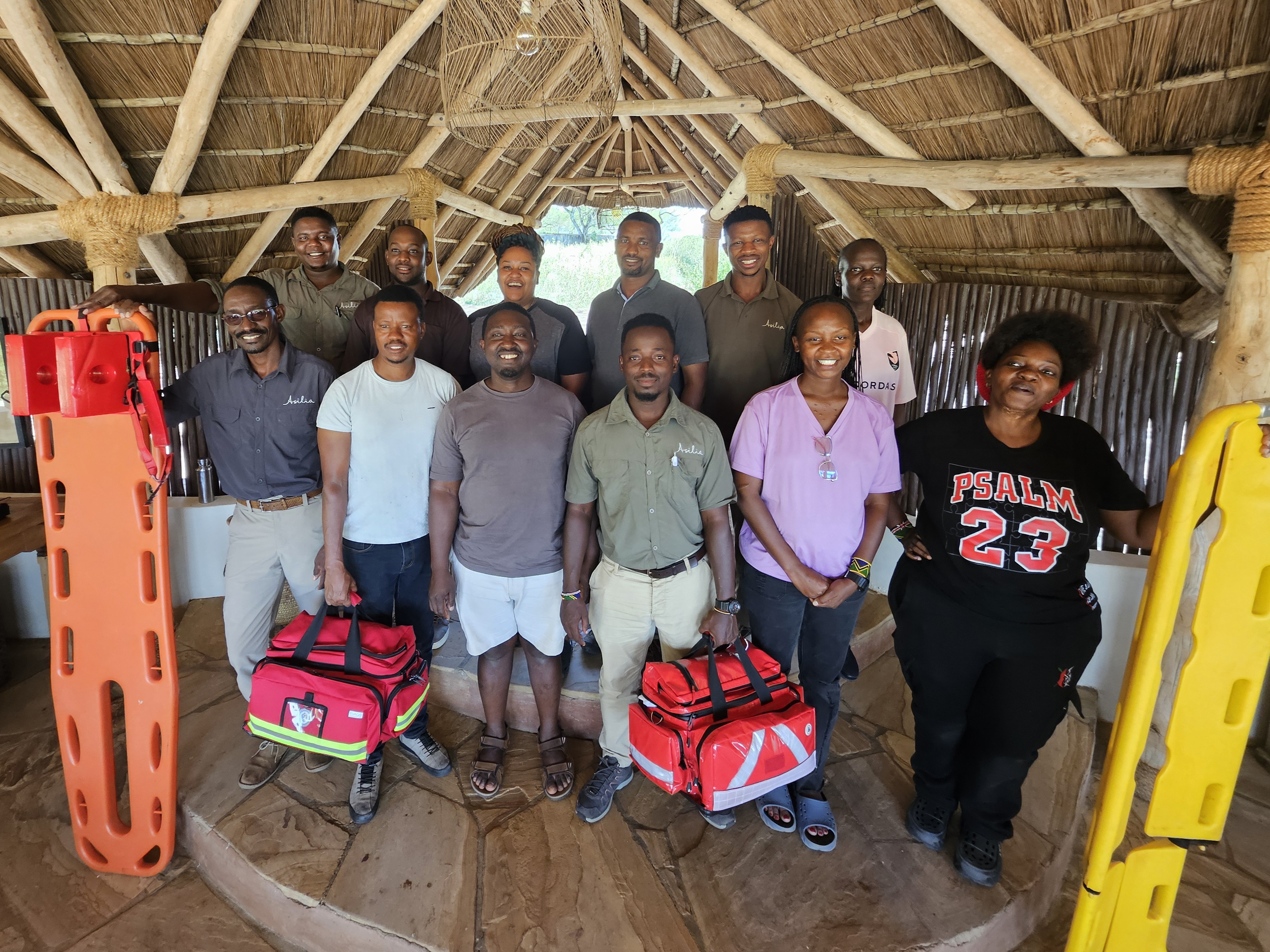
Remote First Responder Training - Tanzania
When preparation matters most: training first responders in remote Africa
We live in a world where we often hear about emergencies after they happen.
What we don’t often see is the preparation that shapes what comes next.
Much of our work sits in that space—building the confidence, judgement and capability people need to respond when it matters most.
Recently, that took us to the heart of Tarangire National Park in Tanzania, delivering specialist remote first responder training in one of the most challenging environments on earth.
Training where reality is the classroom
From the moment we landed on a remote airstrip and travelled deep into the park, it was clear this would not be a conventional training environment.
This is an environment where help is not minutes away, conditions are unpredictable, and decisions carry real weight.
Over ten days, we delivered both a Remote First Responder course and a Refresher Programme to safari guides and camp teams—individuals who may be the first and only line of care in a medical emergency, preparing them for situations they hope they will never encounter.
Watching confidence take shape
One of the most rewarding aspects of this work is seeing how quickly people grow into the role.
At the start, there is often hesitation. That is entirely natural.
Through tailored structured learning, repetition and scenario-based training, that hesitation begins to shift.
People think more clearly. They communicate more effectively. They begin to trust their judgement.
By the end of the programme, that change is visible—not just in what they know, but in how they respond under pressure.
Training that reflects real-world conditions
We place strong emphasis on training that reflects the environments people actually work in.
During the course, that included night-time emergency simulations, managing medical and trauma scenarios in remote settings, and a simulated lion attack requiring rapid, coordinated response to help keep everyone safe.
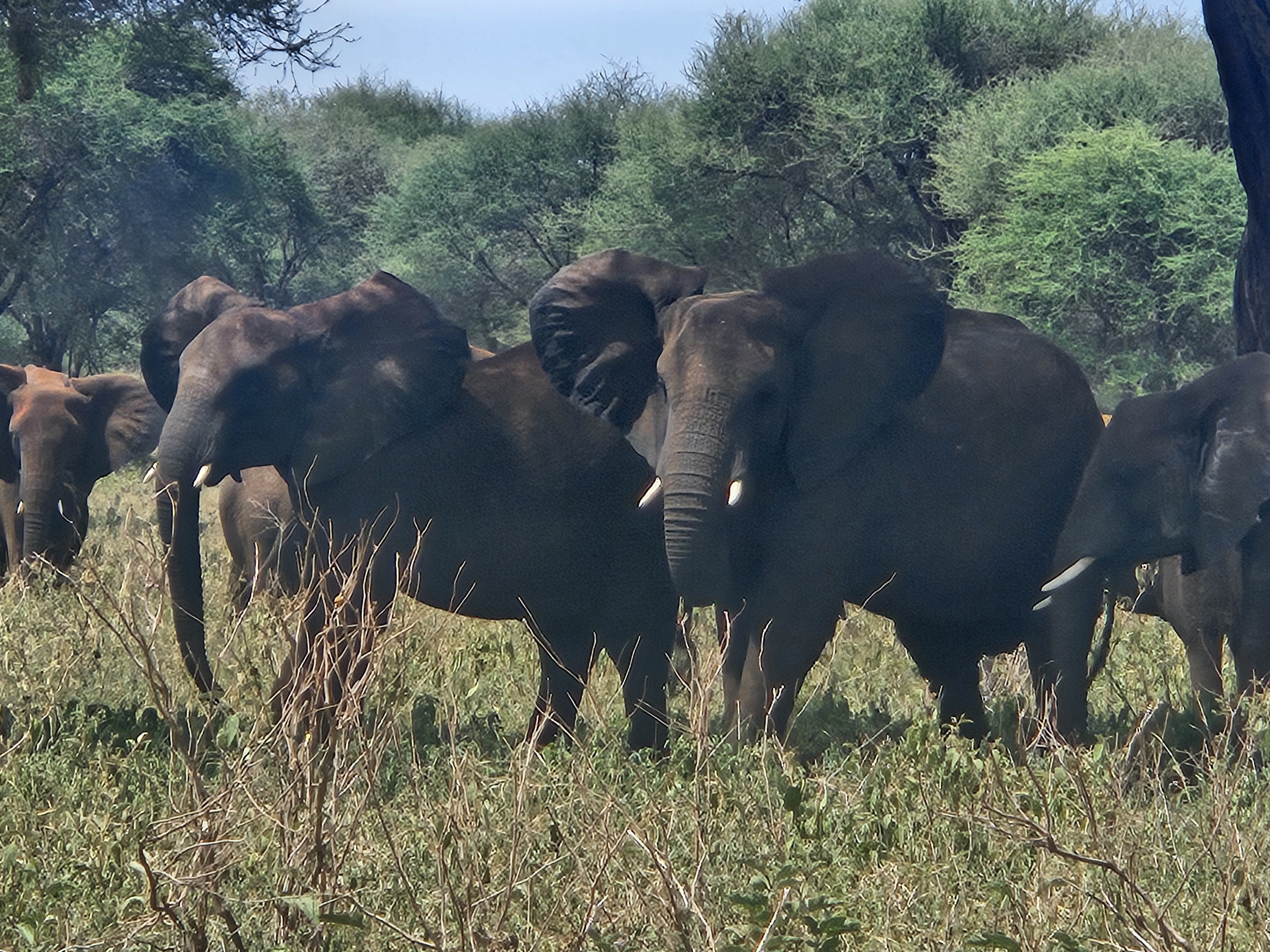
Even an unexpected encounter with local wildlife during training reinforced a key message: these are the conditions in which these skills will be used.
This is what makes remote medical training effective—alignment between learning and reality, delivered with compassion and empathy.
The work that often goes unseen
Much of what we prepare people for are situations no one wants to face.
But in those moments, someone has to step forward.
That is why this training matters.
Long before an incident becomes visible to others, there are individuals making calm, informed decisions—drawing on training, teamwork and their ability to stay composed under pressure.
Beyond trauma: developing assessment skills
As the course progresses, we move beyond trauma into medical presentations—often more complex and less predictable.
Here, the focus shifts to structured thinking:
• Taking medical histories
• Forming working diagnoses
• Developing treatment plans
• Knowing when to seek remote clinical support
In remote environments, clinical skill must be supported by clear thinking, communication and sound judgement.
A broader approach: response and prevention
While much of our work focuses on emergency response training, the same principles apply more widely.
Early recognition.
Confident action.
Clear communication.
These are just as important in mental health and suicide prevention as they are in physical emergencies.
Through our work with The Baton of Hope, a national movement focused on raising awareness and saving lives, we support organisations in taking a more proactive approach to monitoring and supporting mental health.
Because whether in a remote environment or a workplace, the principle remains the same:
The earlier you recognise a problem, the more chance you have to change the outcome.
As the programme in Tanzania came to a close, what stood out most was not just what had been taught—but what had been built.
Confidence. Capability. The willingness to step forward.
For us, that is what this work is about.
Preparing people for real life.
Could your organisation be better prepared?
If your teams operate in remote, austere or high-pressure environments, the ability to respond effectively—both physically and psychologically—is essential.
We support organisations and their people globally with:
• Remote first responder training
• Major incident and emergency medical training
• Mental health and suicide prevention programmes
• Medical consultancy and emergency planning
• First Aid at Work
.jpg)